Blog

Why Split Velocity Surpasses Gold:


Revolutionizing Money Supply Management in the Modern Economy

If you have been keeping up with Split Velocity, at this point you should understand that accounting negligence and malpractice which fails to distinguish between gains in GDP [at the macro level] and or Annual Total Revenue (ATR) [at the micro level] over time and the point in time losses created by financial architecture misinforms how Central Banks and Federal Reserve Banks manage money supply. They do not provide the point in time increases in money supply required to counter losses in the CFI. This accounting negligence forces businesses and institutions to mark up products or use cost plus pricing due to the fact that they are attempting to increase money supply to remain profitable, a practice that drives creeping inflation world wide. It forces economies to subsist on mark ups where growth ranges on average from 0% – 6%. Instead of 100% of the waste being recovered from the CFI must be restored to business and institutions. This accounting negligence and malpractice leads to business losing 100% of their ATR to the CFI for absolutely no relevant reason. Advisory and consulting services institutions and individuals have failed to advise companies and governments about this ongoing problem, instead they manage and remain fixated on subsistence gains from 0%-6% growth while remaining completely blind to 100% losses in the CFI. This negligence is the reason why scarcity remains high across the world and poverty remains unmanageable. These ATR losses must be restored to businesses and we designed the fintech with which to do this and correct this problem, namely, Split Velocity.

In an era where central banks continue to amass gold reserves amid geopolitical tensions and economic uncertainties, a paradigm shift is overdue. As of September 2025, global central banks are on track to purchase around 800–1,000 tonnes of gold this year, down slightly from the record 1,086 tonnes in 2024, yet still representing trillions in tied-up capital due to inadequate advisory services. Nations like China have extended their gold-buying streak to nine consecutive months, underscoring gold’s enduring appeal as a safe haven. However, this reliance on physical assets overlooks a more efficient, digital alternative: the Split Velocity (SV) model, grounded in the Punabantu Equation of Exchange. Developed by business management specialist Siize Punabantu, SV promises to transform monetary policy by enabling exponential economic growth without inflation, making the demand for gold greater than that driven by central banks. This article argues that SV not only outperforms gold in stabilizing money supply but also unlocks unprecedented productivity, urging central banks to rethink their strategies.

The Enduring Allure—and Shortcomings—of Gold Reserves

Gold has long been a cornerstone of central bank reserves, with global holdings exceeding 36,000 tonnes valued at over $3 trillion. In 2025, surveys reveal that 95% of central banks anticipate rising gold reserves in the coming year, driven by its perceived roles as an inflation hedge, geopolitical safeguard, and strategic asset. Proponents argue that gold diversifies portfolios, counters currency devaluation, and signals financial sovereignty—especially amid de-dollarization trends in emerging markets.

Yet, gold’s limitations are glaring. Purchases incur massive upfront costs, with central banks adding 244 tonnes in Q1 2025 alone at prices averaging around $2,500 per ounce (escalating to $3,675 by Q4 projections). Once acquired, gold sits idle in vaults, demanding ongoing expenses for storage, 24/7 security, purity audits, and insurance—running into millions annually per institution. Price volatility poses risks; a supply surge from mining could dilute value, while declines (as seen in 2013’s 20% drop) erode reserve strength and weaken national currencies.

Moreover, gold offers passive protection at best. It failed to prevent or mitigate the 2007–2009 subprime crisis, where reserves remained untouched amid economic collapse. Central bank gold buying, accounting for 20–25% of global demand, artificially inflates prices but stifles broader market growth by diverting resources from productive investments. Opportunity costs are staggering: Funds locked in U.S. gold reserves (valued at ~$500 billion) could instead address infrastructure deficits, hunger affecting 44 million Americans, or unemployment programs.

In essence, gold perpetuates a reactive, resource-intensive approach to money supply management, rooted in outdated models like the traditional Circular Flow of Income (CFI), which overlook systemic inefficiencies leading to inflation and stagnation.

Introducing Split Velocity: A Dynamic Alternative Powered by the Punabantu Equation

Enter Split Velocity, an innovative economic framework that addresses these flaws head-on. At its core is the Punabantu Equation of Exchange, a refinement of Irving Fisher’s classic MV = PT (where M is money supply, V is velocity, P is price level, and T is transactions). The Punabantu version, KV(MS/E) = PYR, introduces key components: R (operating system, representing transactions per cycle), S (emoney multiplier for balance restoration), E (emoney constrictor for efficiency), and K (virtual velocity from splitting).

Unlike Fisher’s equation, which assumes a linear economy prone to zero growth and treats velocity as aggregate, Punabantu’s model splits velocity into dual streams—capital (productivity-focused) and household (consumption-focused). This “split” allows money to perform multiple roles simultaneously per cycle (e.g., R=2), effectively doubling output along the Production Possibility Frontier (PPF) without price hikes. For instance, in a $300 billion economy, SV shrinks apparent money supply (M/E) while boosting virtual velocity (K), resulting in doubled GDP at constant prices.

The benefits are profound: SV creates a “price plane” where sellers lack incentives to inflate costs, enabling money supply to double annually tied to real productivity gains. Empirical tests, replicable using public GDP data, reveal 100% annual CFI losses recoverable through SV, projecting growth rates exceeding 15% without inflation, poverty, or recession. By advancing or boosting GDP by as much as 0%–100% per annum—recovering the full spectrum of CFI inefficiencies—SV fosters an environment of rapid economic expansion. Implementation is digital and cost-effective, leveraging electronic money creation at near-zero marginal expense—no vaults, no audits, no physical risks.

Head-to-Head: How Split Velocity Outperforms Gold

SV’s superiority over gold is evident across key dimensions of money supply integrity:

  • Inflation Control: Gold hedges against inflation but cannot prevent it. SV’s price plane eliminates inflation proactively by balancing money supply with output, making fiat more stable than gold (where supply doublings erode value).
  • Crisis Resilience: Gold provides passive sovereignty but proved ineffective in crises like 2007. SV accelerates growth during shocks, injecting funds into productive splits to boost employment and output, countering recessions dynamically.
  • Cost and Efficiency: Gold’s high acquisition and maintenance costs drain resources. SV operates electronically, freeing capital for infrastructure and social programs while unlocking exponential growth.
  • Market Impact: Central bank gold purchases artificially support demand but stunt organic growth. SV enhances purchasing power, naturally surging private gold demand (e.g., jewelry in booming economies) beyond what banks can buy, benefiting miners sustainably. Crucially, SV’s capacity to boost GDP by 0%–100% per annum amplifies this effect dramatically. For example, elevating an economy’s growth rate from 6% to 36%—achievable through SV’s velocity splits and CFI recovery—would increase per capita income and disposable wealth, driving demand for gold as a luxury or investment asset in far greater quantities than central bank purchases. Historical precedents, like China’s high-growth periods in the 2000s–2010s, show how rapid expansion correlates with jewelry demand spikes exceeding 1,000 tonnes annually, dwarfing current CB buys of ~800–1,000 tonnes.
  • Overall Stability: While gold is volatile and idle, SV transforms fiat into a durable store of value, doubling money supply at constant prices via the Punabantu Equation.

In short, SV addresses the root CFI defects that mislead central banks into gold dependency, offering a proactive, scalable solution.

Implications for Central Banks and the Path Forward

Adopting SV could redefine monetary policy, but resistance stems from entrenched practices. Accountants and advisors, bound by professional standards, risk negligence by ignoring SV’s empirical evidence in favor of gold—potentially actionable under frameworks like the U.S. Federal Reserve Act or EU’s Treaty on the Functioning of the European Union. As surveys show increasing active gold management (up to 44% in 2025), it’s time for pilots of SV technology to demonstrate its potential.

In conclusion, while gold has served economies well historically, Split Velocity represents the future: efficient, inflation-proof, and growth-oriented. Central banks must embrace this innovation to foster resilient, equitable prosperity—before another crisis exposes gold’s limitations once more. A balance needs to be struck between an effective tool like Split Velocity and gold purchase where the advantages of both are used to leverage and manage money supply.



Reforming Accounting to Fix Hidden Losses in the Circular Flow of Income

The global economy is plagued by systemic inefficiencies rooted in the circular flow of income (CFI), a foundational model in economics that describes the reciprocal movement of money between households, businesses, governments, and financial institutions. These inefficiencies manifest as unrecovered losses, draining resources from productive enterprises. To rectify this, we must reclaim these dissipated assets and redirect them toward businesses, fostering sustainable growth.

Achieving such reform demands a fundamental overhaul of prevailing accounting standards. Current practices fail to differentiate between gross domestic product (GDP) measured over time—representing cumulative gains—and GDP at any instantaneous point, which often conceals latent losses. This oversight constitutes a form of accounting malpractice, as demonstrated by empirical analyses such as the Test for Split Velocity. Even leading international accounting, auditing, and advisory firms perpetuate this error, providing misguided counsel to stakeholders. The repercussions are far-reaching, influencing corporate operations, government fiscal policies, parliamentary oversight of public finances, central bank monetary strategies, and stock exchange governance.

The economic toll is substantial, perpetuating inflation, instability, and suboptimal resource allocation. To illustrate, consider a relatable example accessible to non-specialists: the 2022 financial performance of First Quantum Minerals (FQM), a major mining company.

In 2022, FQM reported a net profit of $1.034 billion on total revenue of $7.626 billion, with implied total costs of approximately $6.592 billion. Under conventional accounting, this is interpreted as profit equaling total revenue minus total costs over the fiscal period: $7.626 billion – $6.592 billion = $1.034 billion. However, this temporal aggregation overlooks instantaneous dynamics. At any given moment, FQM effectively forfeits an amount equivalent to its total revenue to the CFI’s inefficiencies—resources that leak out without recirculation. Thus, the $7.626 billion in revenue generated over time is offset by an equivalent hidden loss at each point, yielding zero net growth ($7.626 billion – $7.626 billion = $0).

Businesses cannot thrive in a zero-growth paradigm. To compensate, FQM and similar entities resort to cost-plus pricing—marking up products beyond production costs—to artificially inflate money supply by $1.034 billion. This practice stems from the same accounting blind spot, which leaves central banks oblivious to the need for targeted interventions to neutralize point-in-time losses. The result is entrenched inflation and broader economic volatility. Our innovation, the Split Velocity system, is engineered to mitigate this precise issue.

Split Velocity operates instantaneously to recapture CFI losses, restoring them to the enterprise. For FQM in 2022, this would have reclaimed the $7.626 billion dissipated to the flawed CFI, effectively yielding $7.626 billion in recoverable earnings. While technically distinct from traditional profit, these restored funds are functionally equivalent. Due to accounting oversights, however, FQM unwittingly forfeited approximately $6.592 billion in potential earnings.

The implications for stakeholders are stark. FQM’s earnings per share stood at roughly $1.50 (based on 692.5 million shares outstanding). With Split Velocity’s recovery mechanism, this could have risen to $11.04 per share, representing a per-share loss of $9.54 attributable to accounting negligence—a collective shortfall of $6.592 billion for shareholders.

This simplified case underscores a pervasive global phenomenon: every business suffers analogous losses, depriving societies of vital resources. The CFI must not be permitted to erode value unchecked. Our commitment is to drive systemic change, advocate for accounting reforms, and position Split Velocity as the catalyst for accelerated, baseline economic growth worldwide.

(*It’s also worth noting that FQM spent $5.38B on Capital [equipment, machinery, taxes, repaying loans, electricity etc] in 2022 which is $2.246B less than it could have invested with Split Velocity, which would have been able to free up 100% of Total Revenue ($7.626B) for Capital expenses by recovering resources being wasted by the CFI, which would have allowed for an increase in FQM’s overall mining output.)

Split Velocity is proprietary © 2025 All Rights Reserved

All the information on Split Velocity, including this, is copied, reproduced or derived from the book:

The Greater Poverty & Wealth of Nations, 2010 Siize Punabantu

Go through and take the Empirical and Legally Admissible Test for Split Velocity here:

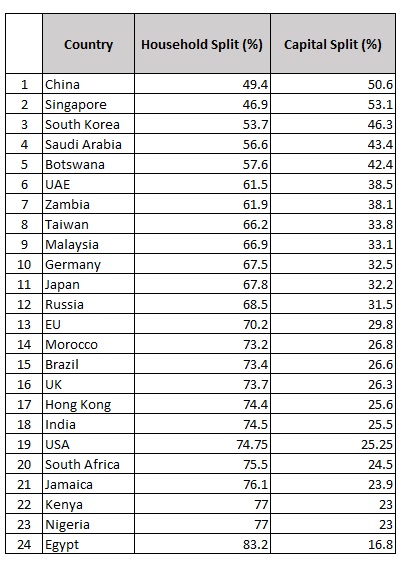
Run the test to see how it affects a national economy (sample of 24 countries) here:

https://collision-drive.blogspot.com/p/split-velocity-test-v9.html

Go through a Post Test Analysis for the EU here:

Advancing to a Split Velocity Model: Achieving Lower Risk, Higher Returns, Lower Inflation, and Accelerated Economic Growth

Abstract

This paper introduces the Split Velocity model as a transformative approach to economic systems, addressing the inefficiencies inherent in the traditional Circular Flow of Income (CFI). By achieving 100% recovery of losses within the CFI, the Split Velocity model establishes a lossless economy characterized by a baseline 1:1 return on investment over a one-year period. This contrasts sharply with the current zero-growth economy, where baseline returns are effectively 1:0, leading to reliance on cost-plus pricing, creeping inflation, and heightened financial risk. Through theoretical analysis, the paper demonstrates how the Split Velocity model balances money supply with productivity, creates price stability via a “price plane,” reduces inflation, lowers investment risk, enhances returns, and accelerates economic growth. The model fosters a well-oiled economic machine where productivity booms are matched by sustained demand, making it superior to the inflation-prone, inefficient status quo.

Introduction

The concept of the time value of money (TVM) is fundamental to financial decision-making, encapsulating the idea that a dollar available today is worth more than the same dollar in the future due to its potential earning capacity. In practical terms, TVM prompts the question: If an investor has one dollar to allocate from day one over a 365-day period (one year), where should it be invested to maximize percentage gain? Traditional options range from low-risk assets like treasury bills or government bonds to higher-risk instruments such as stocks or cryptocurrencies like Bitcoin.

However, the current economic framework, built on a flawed Circular Flow of Income (CFI), often results in a zero-growth baseline where the expected return on that dollar is zero (1:0). Businesses counteract this through markups or cost-plus pricing, which induces minimal GDP growth but perpetuates inefficiencies, inflation, and risk. This paper proposes the Split Velocity model as a superior alternative. By fully recovering losses in the CFI, the model creates a lossless economy with a baseline return of 1:1, meaning a one-dollar investment yields one dollar in return by year’s end. This shift not only minimizes risk and inflation but also amplifies returns and economic growth, offering a more efficient system for governments, businesses, and individuals.

The Flawed Circular Flow of Income and the Zero-Growth Economy

The traditional CFI model depicts the economy as a cycle where households provide factors of production to businesses, receiving income in return, which is then spent on goods and services. However, inherent flaws in this model lead to withdrawals (e.g., savings, taxes, imports) that disrupt the flow, creating losses that manifest as economic stagnation.

In a zero-growth economy, the baseline TVM is 1:0: a dollar invested over one year yields no net gain due to these systemic losses. To mitigate this, businesses employ cost-plus pricing, adding markups to cover costs and generate profits. While this strategy induces slight GDP increases, the gains are largely subsistence-level, reliant on marginal economic expansion. For instance, at the microeconomic level, individual investors might achieve 26% returns in cryptocurrencies, yet the macroeconomy may only grow by 6% annually.

Cost-plus pricing exacerbates inflation. When businesses markup prices, they effectively demand money that does not yet exist in the economy. Consider a simplified example: an economy with $10 in circulation and one mango. If a business prices the mango at $13 to secure a $3 profit, the additional $3 must be supplied by the central bank. This increases the money supply without a corresponding rise in productivity, resulting in creeping inflation. Central banks, compelled to expand the money supply to facilitate transactions, further fuel this cycle. Inflation, in turn, elevates financial risk, deterring investment and perpetuating inefficiency.

The current system thus traps economies in a quagmire of high risk, low returns, and inflation proneness. Governments, businesses, and individuals operate in an environment where productivity is mismatched with demand, and economic growth is stifled by these structural deficiencies.

Introducing the Split Velocity Model

The Split Velocity model addresses the CFI’s shortcomings by applying a mechanism that achieves 100% recovery of losses, effectively splitting and optimizing the velocity of money flows. This creates a lossless economy, where the baseline return on a one-dollar investment over one year is 1:1—representing zero net loss and full preservation of value.

At its core, the model ensures that businesses can invest in capital without subtractions from households, while household purchasing power remains intact. This dual preservation eliminates withdrawals that plague the traditional CFI, leading to a harmonious balance between supply and demand.

A key innovation is the establishment of a “price plane,” where businesses set prices without strong incentives for changes. In this framework, a business can achieve up to 100% profit at a stable price point, obviating the need for markups or cost-plus pricing. The price plane arises because the model aligns money supply precisely with productivity gains, preventing artificial inflation.

Benefits of the Split Velocity Model

Lower Inflation and Price Stability

Unlike the current system, where cost-plus pricing necessitates money supply expansions, the Split Velocity model synchronizes monetary growth with real productivity. This resistance to inflation stems from the elimination of needless markups: businesses recover total revenue lost to CFI flaws, allowing profitable operations at fixed prices. Creeping inflation is curtailed, as central banks no longer need to inject unbacked currency to bridge pricing gaps. The resulting price stability reduces uncertainty, fostering a predictable economic environment.

Reduced Financial Risk

Inflation inherently amplifies risk by eroding purchasing power and complicating investment forecasting. The Split Velocity model’s inflation resistance thus lowers overall financial risk. With a baseline 1:1 yield, investments become safer across asset classes—from treasury bills and government bonds to stocks and cryptocurrencies. The absence of CFI-induced losses means capital investments face no unwarranted subtractions, making the model the safest and least risky financial asset class available.

Higher Returns

The baseline 1:1 return sets a floor for investment yields, but the model’s potential for exceeding this is substantial. Businesses thrive on restored revenues, driving productivity booms. Since household consumption is not compromised, effective demand matches this increased output, creating a virtuous cycle. Investors are drawn to opportunities where a one-dollar input can reliably yield one dollar or more, enhancing attractiveness across markets. This contrasts with the zero-growth baseline, where returns are capped by minimal GDP increments.

Accelerated Economic Growth

By functioning as a “well-oiled machine,” the Split Velocity model accelerates growth through unchecked productivity and sustained demand. No longer hindered by inflation or CFI losses, economies experience rapid expansion. Commercial interest surges, as lower risk and higher baseline yields encourage investments in stocks, bonds, and even riskier assets like crypto. The model’s lossless nature ensures that growth is not subsistence-based but exponential, far surpassing the 6% macro growth seen in inflationary environments.

Comparative Analysis: Split Velocity vs. Current Economy

AspectCurrent Zero-Growth EconomySplit Velocity Model
Baseline Return1:0 (zero net gain)1:1 (full preservation and potential for more)
Inflation MechanismCost-plus pricing drives money supply increasesBalances money supply with productivity; price plane stability
Risk LevelHigh due to inflation and CFI lossesLow; inflation-resistant and lossless
ReturnsSubsistence gains tied to tiny GDP growthHigh baseline with strong upside potential
Economic GrowthStagnant, inefficient, inflation-proneAccelerated, productive, demand-matched
Investment AppealDeterred by risk and low yieldsEnhanced by safety and lucrativeness

The table illustrates the stark superiority of the Split Velocity model. In the current system, inefficiencies force reliance on inflationary tactics, yielding a high-risk, low-growth trap. The Split Velocity alternative eliminates these pitfalls, promoting a efficient, growth-oriented economy.

Addressing Malpractice in Managerial Finance and the Imperative for Reform

A critical oversight in managerial finance lies in its malpractice and negligence, particularly the inability to distinguish gains accrued over time from losses incurred at any instantaneous point, as reflected in GDP and Total Revenue (TR) metrics. This accounting flaw has profoundly skewed global economic practices, steering humanity toward pervasive poverty, artificial scarcity, and immense suffering and strife by perpetuating inefficient resource allocation and systemic imbalances. Professional advisory firms, which guide key stakeholders including governments, Congress, Parliament, businesses, shareholders, investors, and the general public, bear responsibility for this negligence and must address it forthwith through rigorous reforms in financial reporting and analysis. The Split Velocity test demonstrates empirical validity through its application to real-world economies, such as the US, revealing imbalances between household consumption and capital investment that align with observed economic distress; it is admissible under established economic laws like the Quantity Theory of Money and principles of monetary velocity, as well as international accounting standards that emphasize accurate temporal valuation. Every effort must be made to rectify this issue, restoring TR to businesses and cultivating an economy with diminished risk, negligible inflation, and elevated performance in stock markets and other financial instruments, thereby delivering substantially greater returns for investors.

Conclusion

Advancing to a Split Velocity model represents a paradigm shift from the flawed, inflation-prone zero-growth economy to a lossless system of lower risk, higher returns, reduced inflation, and accelerated growth. By recovering CFI losses and establishing a price plane, the model ensures balanced money flows, booming productivity, and matched demand. Governments, Congress, Parliament, businesses, and individuals stand to benefit immensely, operating in an environment where the time value of money is maximized safely and lucratively. Future research could explore empirical implementations, but the theoretical advantages outlined here underscore the model’s potential to revolutionize economic structures.

Mirror, Mirror on the Wall….which is the Greatest Country of Them All?

A much needed reality check.

The Split Velocity Test of a sample of 24 countries.

It tells us something that we have known for some time now, but have not had the metric to point at. Your wellbeing is much greater living in some “poor developing countries” like Zambia and Botswana than when you are living in what are considered “better off” or the wealthiest and most developed countries in the world.

When consumption by households has grown disproportionately to the extent that it places tremendous pressure on capital the competition for resources in a given population between individuals and groups begins to move toward intolerance, hegemony, crime, underhandedness, and inevitably hate. There develops a “who is eating my lunch” mentality that, like water finds a crack through which to leak its contents and will emerge in all kinds of negative behaviour depending on the prevailing divisions and weaknesses in an economy. If the cracks are between foreigners and locals, xenophobia will begin to agitate within a country, if its between rich and poor social groups may riot against their own elected government, if its between racial groups racism will begin to stoke divisions, if there are no clear divides the cracks may begin to appear within groups in unexpected ways. Often the animosity between human beings may seem to have no source or may seem inhumane, bordering on insanity, however, the split, being consumption heavy, is placing any given population under duress leading to a high potential for internal mental strife and social conflict due to the competition for scarce resources being unnaturally high. This problem remains difficult to see or explain without a Split Velocity test.

Resourcism and a “Who’s Eating My Lunch Mentality”

Split Velocity requires countries to aim for a 50:50 balanced or “ying and yang” like split between Households and Capital, or to where the split is heavier on the Capital side in order for the availability of resources in an economy to adequately satisfy a population. However, an emphasis is placed on balance since a situation where Capital overwhelms Households can also have negative socio-economic effects on a population.

The book the Greater Poverty & Wealth of Nations [ Siize Punabantu], introduces the term “resourcism”. Resourcsim refers to how individuals and groups of any kind position themselves to attract and gain resources of any kind which they feel are necessary and important for the type of life or lives they want to have.

The 24 countries surveyed indicate where a person or group’s sense of well-being and happiness is higher. When the Household metric becomes too high against investment in Capital it means too many people are competing for proportionally smaller availability of wealth and resources be it money, food, health, housing, hospitals, clinics, jobs and so on. The undercapitlised economy is unable to offer these in sufficient quantities. These economies whether rich or poor, developed or developing are classified as being in a constant and persistent state of distress, its like the population being inside an invisible socio-economic pressure cooker. The behavior of their populations will begin to reflect this distress wherever socio-economic cracks may exist creating some kind of general unease, disregard for laws and rules as survival instinct takes precedence or it may grow into outright open confrontation between people and groups.

Transformation

Though countries with a disproportionately large Household or consumption split against Capital may be gravely disadvantaged they offer the greatest hope. This is because they also have the opportunity to experience the greatest shift to higher living standards and the greatest increase in wellness, happiness and general socio-economic wellbeing when Split Velocity is used to re-balance their economies by recovering the tremendous amount of resources being wasted by the defective CFI equivalent to GDP.

Split Velocity is a scalar tool that recovers losses in total revenue (TR) being wasted by a poorly designed Circular Flow of Income (CFI). It is able to restore TR to business of any size, be it a corner grocery store or a multinational mining conglomerate. Being a scalar economic tool means it is able to commandeer GDP and moves resources at macroeconomic levels, like earth moving equipment, yet at the same time processes each individual microeconomic input with the necessary dexterity that ensures economies can turn the tables on scarcity, moving from high levels of duress to abundance and prosperity capable of satisfying the needs of any given population.

Leaders who drive the implementation of our Split Velocity model will be responsible for the greatest increase in wealth, wellness and wellbeing in history and will be forever remembered for the transformation they brought to their people and the economy.

The Split Velocity Test: Revealing 100% Inefficiency in the European Union’s Circular Flow of Income and Potential Recovery through SV-Tech – A 2024 Case Study

Author: Siize Gabriel Punabantu
Date: July 16, 2025

Abstract

The Circular Flow of Income (CFI) model illustrates the reciprocal exchange of resources between households and firms. The Split Velocity Test quantifies the allocation of gross domestic product (GDP) between households (labor) and capital (non-human inputs) at a point in time, revealing a structural inefficiency where resources allocated to one factor are unavailable to the other, resulting in a 100% subtraction loss equal to GDP. Using 2024 European Union (EU) GDP data from the IMF and Eurostat, we estimate the split as approximately 70.2% to households and 29.8% to capital, incorporating consumption, investment, government spending, and net exports with detailed breakdowns. This moderately consumption-heavy split supports growth but highlights infrastructure gaps and debt burdens. The inefficiency renders the economy a “zero growth” system. Split Velocity Technology (SV-Tech) can recover 0–100% of these wasted resources, potentially doubling GDP and addressing infrastructure and debt issues in approximately 0.43 years through parallel allocation. The analysis draws on classical economic theory and contemporary data, demonstrating how SV-Tech could enhance economic performance.

Keywords: Circular Flow of Income, Split Velocity Test, GDP Inefficiency, Resource Recovery, SV-Tech

Page 1

Introduction

The Circular Flow of Income (CFI) model, articulated in Adam Smith’s Wealth of Nations (1776), illustrates the exchange of money and resources between households and firms [1]. Households provide labor and receive wages, while firms produce goods and services, generating revenue. However, the CFI overlooks a critical inefficiency: at any point in time, resources allocated to households (e.g., wages) are unavailable to capital (e.g., machinery), and vice versa, creating a “subtraction” effect. The Split Velocity Test quantifies this, demonstrating a 100% inefficiency equal to GDP. Using 2024 EU data, this paper derives the percentage split, highlights consumption-driven growth with infrastructure and debt challenges, quantifies shortfalls, and proposes SV-Tech for recovery, potentially doubling GDP and resolving key issues.

Page 2

The Split Velocity Test

The Split Velocity Test evaluates the CFI by assessing resource allocation between households and capital at a specific moment. It assumes GDP components—consumption (C), investment (I), government spending (G), and net exports (NX)—are spent on either labor (households) or non-human inputs (capital). The methodology involves:

  1. Calculating daily GDP: Annual GDP divided by 365.
  2. Allocating components: C to households, I to capital, G (55% households, 45% capital), NX proportional to C/I.
  3. Computing the split: Households % = (Households allocation / Total) × 100; Capital % = 100 – Households %.
  4. Demonstrating inefficiency: Allocation to one factor is a loss to the other, equaling 100% of GDP.
Page 3

Percentage Split for the EU Using 2024 Data

For 2024, the EU’s nominal GDP was $18.50185 trillion (IMF, Eurostat) [2], [3]. Daily GDP is $50.69 billion.

Component Breakdown:

  • Consumption (C): $9.44099 trillion (51.0%).
  • Investment (I): $4.07038 trillion (22.0%).
  • Government Spending (G): $4.62546 trillion (25.0%).
  • Net Exports (NX): $0.36502 trillion (2.0%).

Table 1: Allocation of 2024 EU GDP Components

Component Annual Households ($T) Annual Capital ($T) Daily Households ($B) Daily Capital ($B)
Consumption (C) 9.44099 0 25.866 0
Investment (I) 0 4.07038 0 11.152
Government Spending (G) 2.544 (55%) 2.08146 (45%) 6.984 5.704
Net Exports (NX) 0.25478 (69.8%) 0.11024 (30.2%) 0.698 0.302
Total 12.23977 6.26208 35.59 15.10

Split: Households 70.2% ($35.59B / $50.69B), Capital 29.8% [2], [3].

Page 4

Implications of the Split: Consumption-Driven Growth with Challenges

The 70.2%/29.8% split indicates a consumption-heavy economy (C, $9.44099T), supporting a population of 450M [4]. Investment (22%) supports moderate growth (1.8% in 2024), but infrastructure gaps ($10T for energy, transport) and high debt (82.3% GDP) signal stress [3], [4]. Inequality (Gini ~0.31) is moderate but persistent [5]. Compared to balanced economies like China (49.4%/50.6%), the EU’s consumption bias limits capital efficiency.

Table 2: EU Infrastructure and Debt Shortfalls

Area Current Status Comparison Implications
Roads and Bridges Aging; gap $3T [4] USA modernized Maintenance costs
Railways Extensive; gap $2T [4] China 25,000 miles Expansion needed
Airports Congested; gap $1T [4] UAE top-ranked Capacity issues
Ports Efficient; gap $0.5T [4] Singapore advanced Trade competitiveness
Energy Grid Transitioning; gap $3T [4] Germany 40% renewables High transition costs
Water Systems Good; gap $0.5T [4] Japan low loss Resilience risks
Broadband/5G Uneven; gap $0.5T [4] South Korea 97% Digital divide
Space Exploration Limited; gap $0.2T [4] USA leading Missed innovation
Jobs/Skills Unemployment 6.5%; gap $1T [6] Singapore 2% Skill mismatches
Debt 82.3% GDP; high [3] Japan 250% GDP Fiscal strain
Page 5

Demonstrating 100% Inefficiency

The CFI’s “subtraction effect” makes resources allocated to households ($12.23977T) unavailable to capital, and vice versa ($6.26208T), nullifying $18.50185T GDP [3]. This creates a “zero growth” system despite reported growth [2].

Page 6

Recovering Wasted Resources with SV-Tech

SV-Tech enhances resource velocity, recovering 0–100% of the $18.50185T loss. At 100% recovery, GDP doubles to $37.0037T; at 60%, it reaches $29.60296T. Parallel allocation of $18.50185T/year resolves all issues in ~0.43 years:

  • Debt ($15.23T): $43.26T/year.
  • Infrastructure ($10.7T): $42.79T/year.
  • Specific gaps (e.g., $3T energy, $0.2T space): $0.47T–$7T/year [4].
Page 7

Doubling EU GDP: 2024 Case Study

Base GDP: $18.50185T. At 100% recovery, $18.50185T is reclaimed, yielding $37.0037T. Simulation: Daily households $35.59B, capital $15.10B; annual losses $6.26208T and $12.23977T, respectively.

Page 8

Conclusion

The Split Velocity Test reveals a 100% CFI inefficiency, with a 70.2%/29.8% split highlighting consumption-driven growth with infrastructure and debt challenges. SV-Tech could double GDP and resolve issues in 0.43 years, enhancing the EU’s economic performance.

Page 9

References

  1. Smith, A. (1776). An Inquiry into the Nature and Causes of the Wealth of Nations. London: W. Strahan and T. Cadell.
  2. IMF. (2024). EU Economic Outlook 2024. https://www.imf.org
  3. Eurostat. (2024). National Accounts 2024. https://ec.europa.eu/eurostat
  4. World Bank. (2024). EU Economic Overview 2024. https://www.worldbank.org
  5. OECD. (2024). Income Inequality in the EU. https://www.oecd.org
  6. World Economic Forum. (2025). Future of Jobs Report. https://www.weforum.org
  7. Punabantu, S. G. (2025). The Greater Poverty and Wealth of Nations. Split Velocity Solutions Ltd.
Page 10