
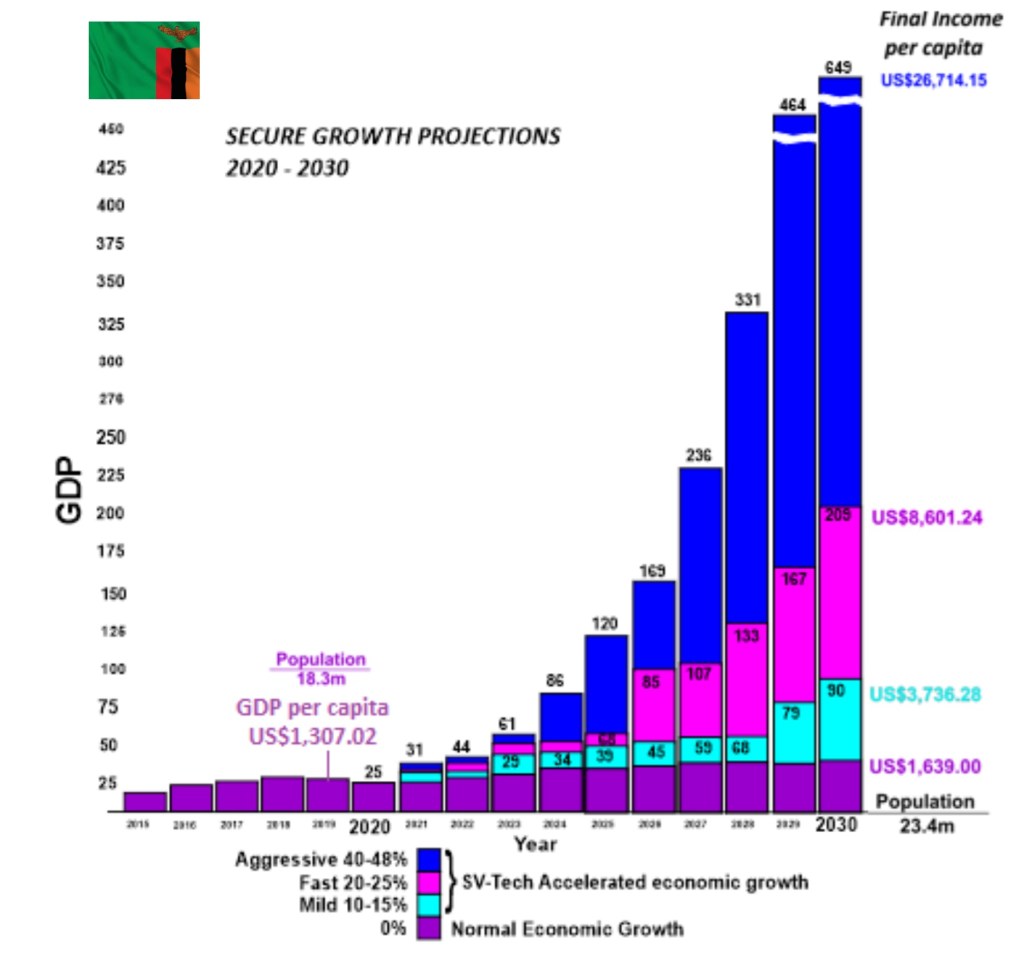
Were Split Velocity implemented between 2020 -2024/5 Zambia would be moving away from a per capita income of U$1,630 to a per capita income of US$3,736 and a GDP of between US$80 billion to US$120 billion (Guaranteed i.e. financed by Split Velocity). A Split Velocity model does not just make predictions, it ensures the resources to finance projections are made available in the economy.
It would have taken the Split Velocity model 4 years to improve per capita income by just US$2,106. This illustrates how difficult it is to grow a national economy. Nevertheless, this would be a 129% improvement in per capita income and therefore per chance a significant 129% improvement in living standards for all Zambians.
At present Zambia’s per capita has lowered from US$1,307.02 to US$1,226.00 as predicted by the chart illustrated below this trend of zero or low growth further aggravated by debt, drought, inflation and other unanticipated economic shocks will continue to 2030 and continue indefinitely beyond that despite valiant and commendable effort to move the economy forward.
The struggle for economic growth is real and it is hoped that the remarkable improvements a Split Velocity model can provide will be introduced to guarantee economic growth in the future.
A Split Velocity model offers the ability to raise per capita income to US$26,814.15 within a short period (10 years). However, it must be implemented to begin to enjoy these levels of growth.

 Split Velocity Solutions Ltd