
27th August 2020
We tried to forewarn and inform about the weaknesses of current strategies.
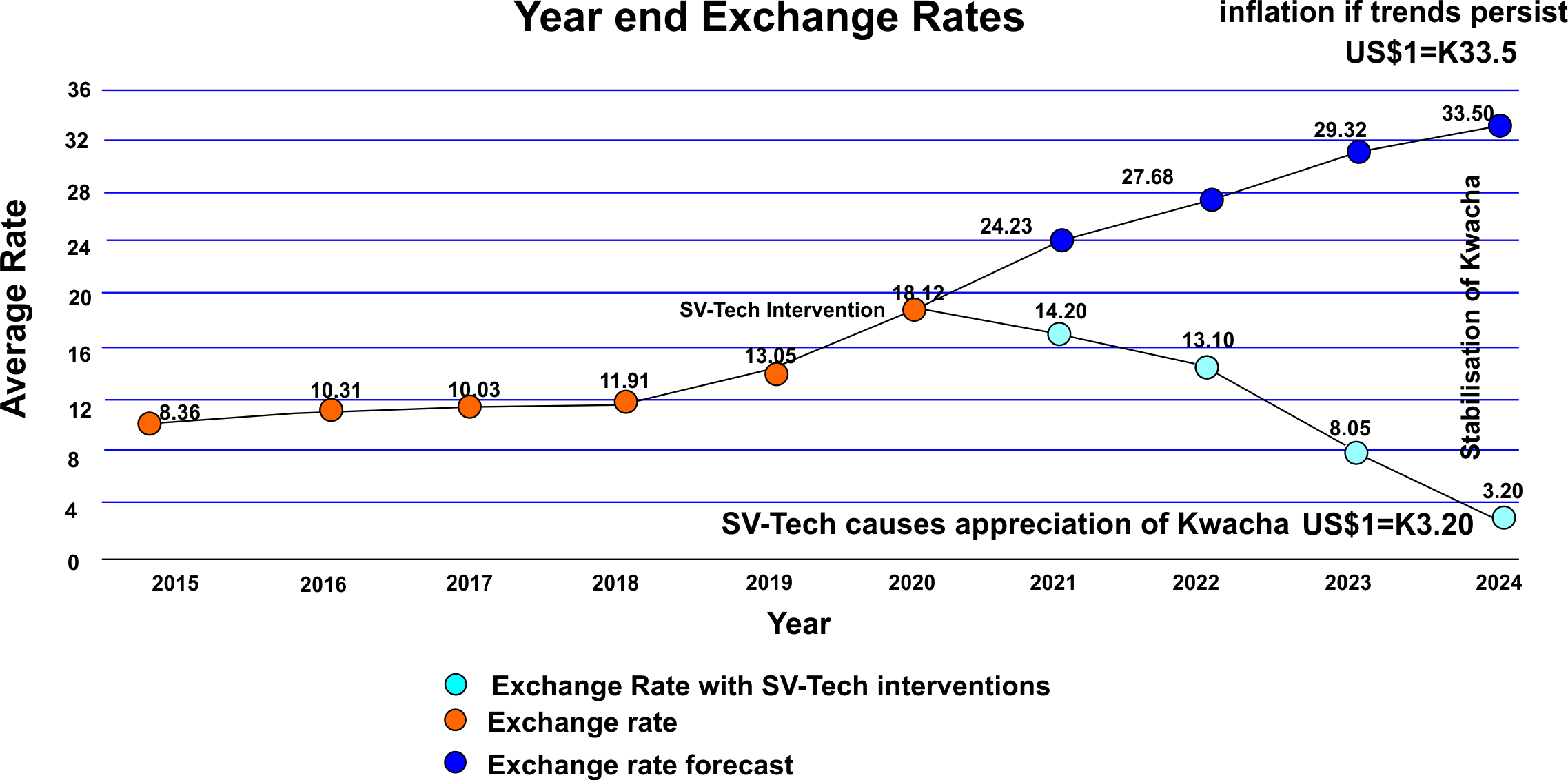
On Tuesday 25th June 2019 [a year ago] under the heading “Ending poverty by default: A challenge for this age” [scroll further down to read this] we alerted the central bank to the inadequacy of applying conventional monetary policy strategies initiated by the monetary policy committee at the time. An economy facing stagflation that is at the limits of its borrowing capacity (Zambia is at 70%) is generally out of options. Its only recourse is to find a benefactor to borrow from. It was hoped and it is still hoped one would be found for Zambia and being patriotic, like everyone else, we still hope this works out.
However, textbook approaches to economic management do not work for developing countries due to the fact that they are generally created for Western models where economies are wealthier and have access to hard currencies. For developed countries to doggedly follow the same style of management as developed countries when developing countries do not have hard currencies and are resource constrained rather than resource endowed does not make sense, in fact it defies logic. It is also important for African nations to be wary of the fact that even state of the art theories and understanding of economics in the world today applied by developed nations has not advanced to where they have identified the unconscionable and pointless waste or loss of income caused by a poorly designed circular flow of income.
Developed countries, at least by contemporary standards, are wealthy. This is evident in their much higher GDP and per capita incomes. Therefore, their primary concern for decades has been how to contain this wealth and not lose it. This has subconsciously influenced the knowledge paradigm that is economic theory today. Since the objective is to contain wealth, the focus is not wealth creation. Even mediocre annual growth rates are sufficient to maintain the status quo of existing wealth. Mediocre growth rates of 4% or 5% are sensible in the context of the huge sums in GDP they are applied to. It explains why they have never identified losses due to inefficiency of the CFI. They have never had a need to identify methods for rapid or accelerated growth. Developing countries are poor. In comparison they have much lower GDP and per capita incomes. Nevertheless, they implement the very same knowledge paradigm for economic theory and confidently pursue the same 4%-5% growth rates applied to insignificant GDP and therefore unsatisfactory economic gains that perpetuate their own underdevelopment whilst leaving them wondering why poverty does not seem to end. Since they don’t have any wealth to contain, what they are in effect containing and sustaining, in state of the art practice, is their own poverty perpetuated by a knowledge paradigm that believes slow or mediocre annual growth is accurate, worth aspiring to and they mistake this position for conventional wisdom to live by.
Resource constrained countries struggling with underdevelopment, poverty and debt simply cannot sit back and allow these lapses in theory and the valuable resources that could be put to good use laid waste, further ravage their economies. If this is the path that remains and continues then more inflation, underdevelopment, an unmanageable economy, difficulty and suffering may be the inevitable result. Nevertheless, there is always hope and ways to navigate the economy toward prosperity can be strategized.
Applying a Split Velocity system for managing a national economy is ideal for developing countries like Zambia because it assumes the nation has no resources, must rely on its own ingenuity and act within its own capacities. SV-Tech assumes any country applying the methodology is resource constrained and therefore must find alternative ways of generating its own internal financial resources to enhance productivity whilst maintaining price and financial system stability.
A Split Velocity model unlocks the equivalent of GDP at constant price. This revised strategy would unlock the equivalent of up to US$26 billion for the Zambian economy (that is, the equivalent of GDP per annum) as well as new monetary policy tools with which to wrestle the Zambian Kwacha from US$1 – K18 back down to US$1 – K1 if this kind of parity was desired by the central bank. It would do this with results gained in record time.
Unlike other strategies, though unconventional, a Split Velocity model is safe, guarantees its outcomes and is grounded in sound financial practice and productivity. Most importantly it is self-reliant, countries do not have to look for a benefactor to help bail them out of crisis, they can use their own tenacity and initiative to raise the resources they need sustainably to transform the lives of citizens.
It is important to note that even with current development strategies the forecast per capita income for Zambia in 2030 is US$1,639.00 – US$2,185 (MoF). This is an alarmingly low increase of US$300 – US$878 after 10 years of economic activity – (a gain of US$87 per year -Zambia may not meet the 7NDP goals and may be worse off in 2030 than it is today, except with a much bigger population notwithstanding unanticipated shocks for which there is currently little or no capacity for mitigation). There is a need to address what realistic difference a per capita income gain of only US$87 a year for 10 years will make in people’s lives, especially if there are unexpected shocks as a risk factor along the way, before this time is lost and can never be regained. On the other hand Split Velocity offers per capita income advances over the same period of up to US$26,714.15 per capita with guarantees, no unnecessary losses to inflation that make results redundant and provisos inherent within the system to deflect shocks to the economy that may interfere with objectives.
Let it be noted that this change in per capita income only deploys 42%-48% of the resources . made available by the Split Velocity System. In other words it does not stretch either the resources or imagination of this technology and its capacity to transform the Zambian economy. The only barrier is the mindset of technocrats. In fact the straight forward capacity of developing economies to achieve these results is demonstrative of how far behind the learning curve developing countries and managers have fallen by trying to implement approaches more suitable for wealthier economies than their own.
This means that a Split Velocity system continues to offer hope as a means that can be deployed for transforming the economy especially in the wake of unexpected shocks. It leaves no ambiguity as to where the resources are with which to achieve these gains. This is achieved without even maximizing or exhausting the resources generated by the Split Velocity system. It is not peddling fairy tales or fantasies, and is not based on guesstimations but provides hard facts and mechanisms for achieving results that will not disappoint implementors in both developed and developing countries.
See the tables below to see how much developing countries in Africa are losing daily and annually to an inefficient and faulty economic operating system in the circular flow of income (CFI). The recovery of these resources could be used to transform lives.

 Split Velocity Solutions Ltd